

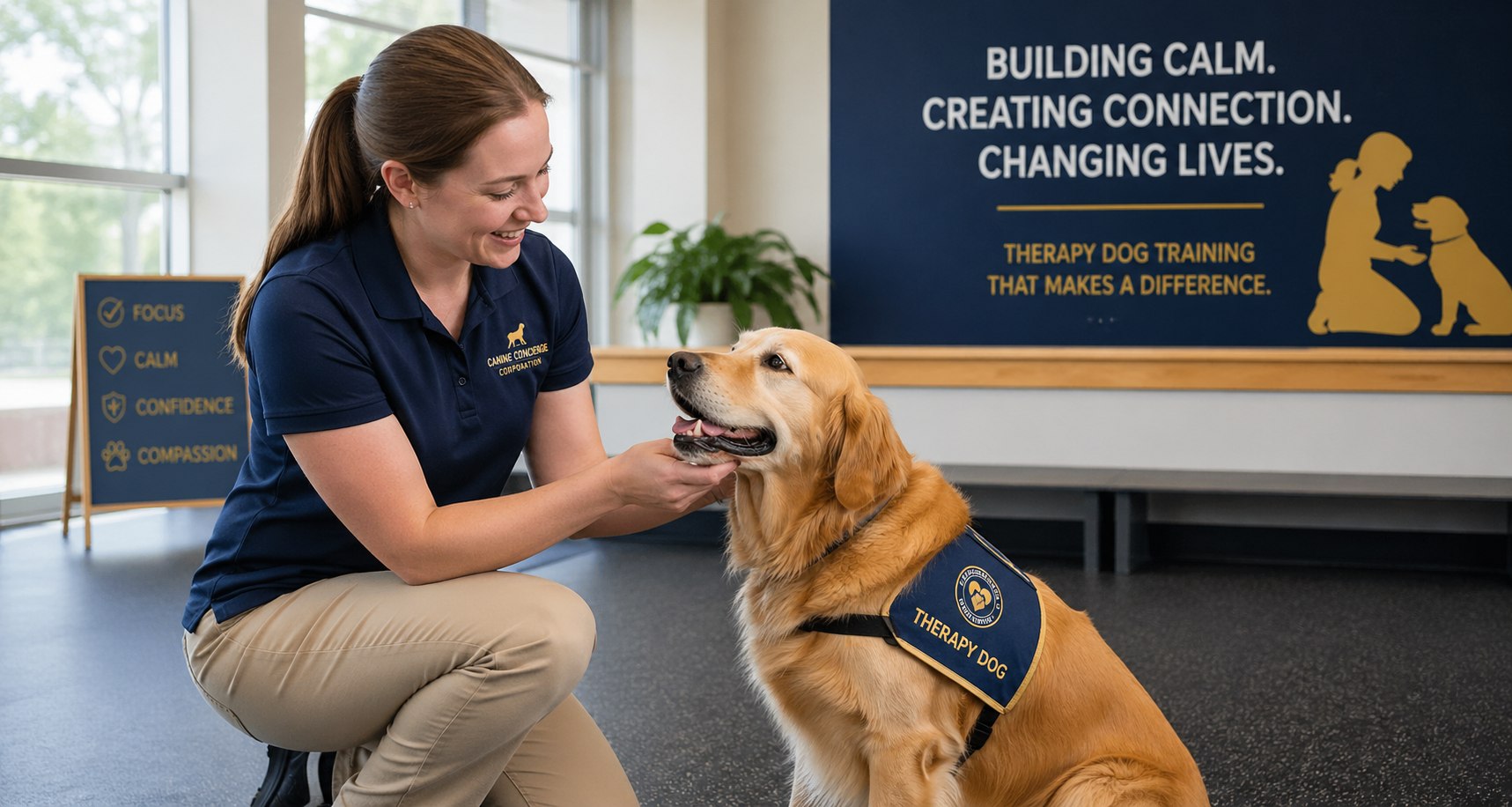
Preparing your dog for animal-assisted service through temperament, stability, social confidence, and responsible handler readiness.
Understanding the Path to Therapy Dog Work
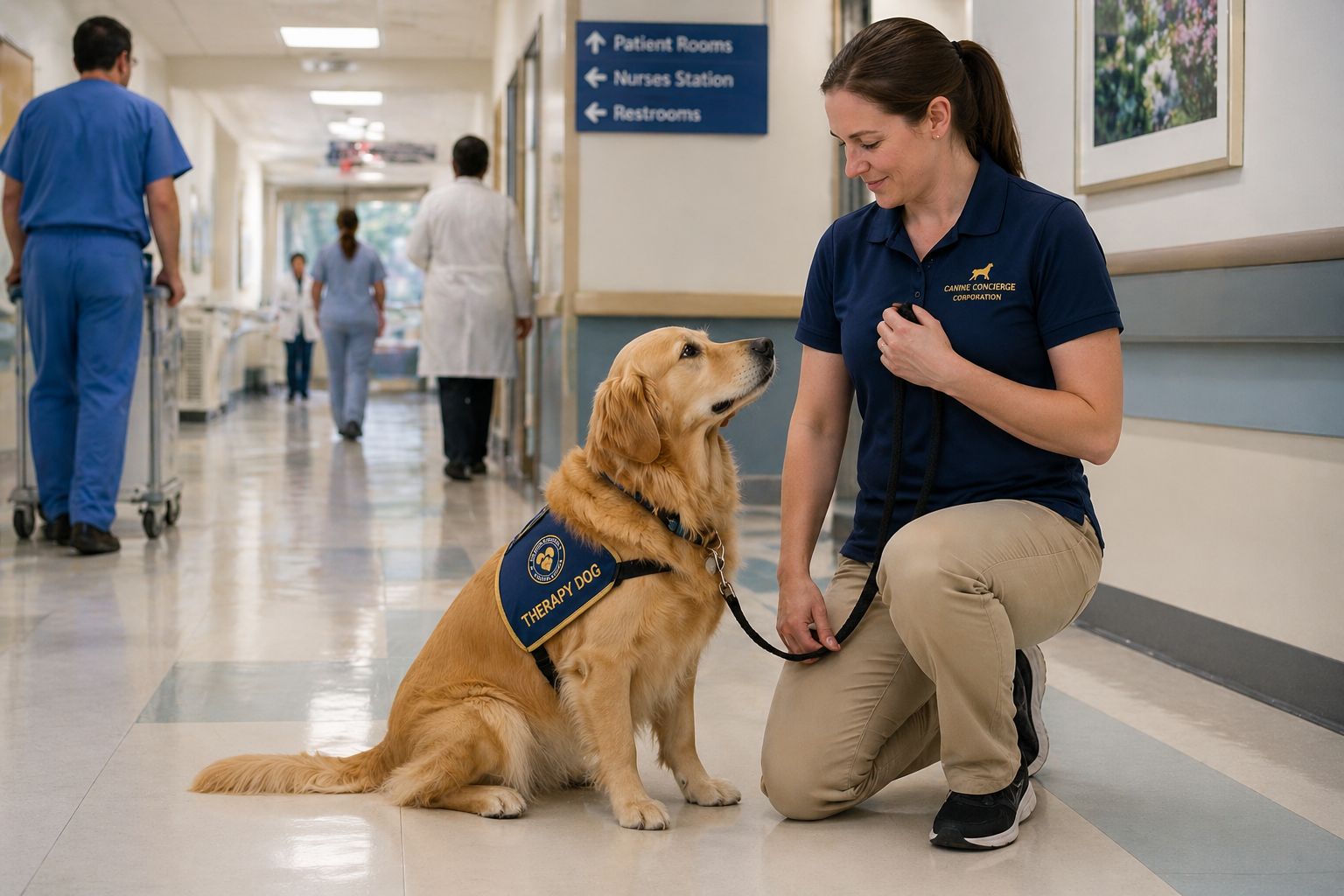
Many dog owners recognize a special “spark”—a calm temperament, a natural affection for people, and a steady presence in unfamiliar situations. But transforming that potential into a certified therapy dog requires more than good manners—it requires structured preparation, environmental conditioning, and handler awareness.
Therapy dogs operate in high-stimulation environments—hospitals, schools, courtrooms, and senior care facilities—where unpredictability is the norm. The goal is not perfection, but reliability under pressure.
What’s the Difference Between a Well-Trained Dog and a Therapy Dog?
Basic obedience is the foundation—but therapy work goes far beyond it.
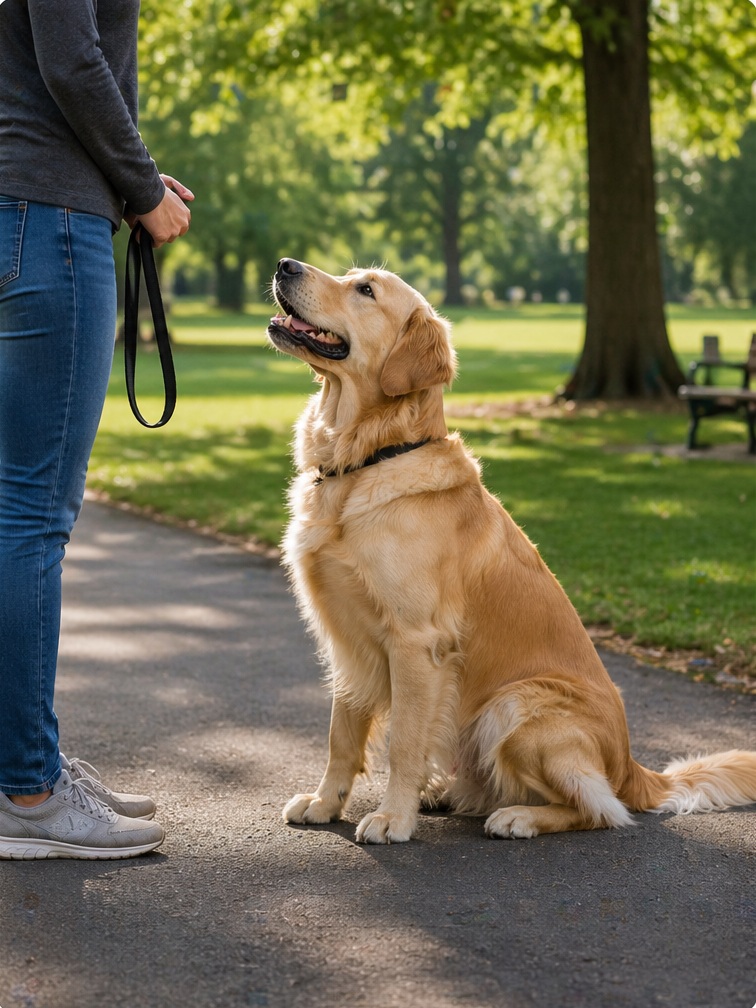
A Well-Trained Dog
Responds to commands in controlled environments.
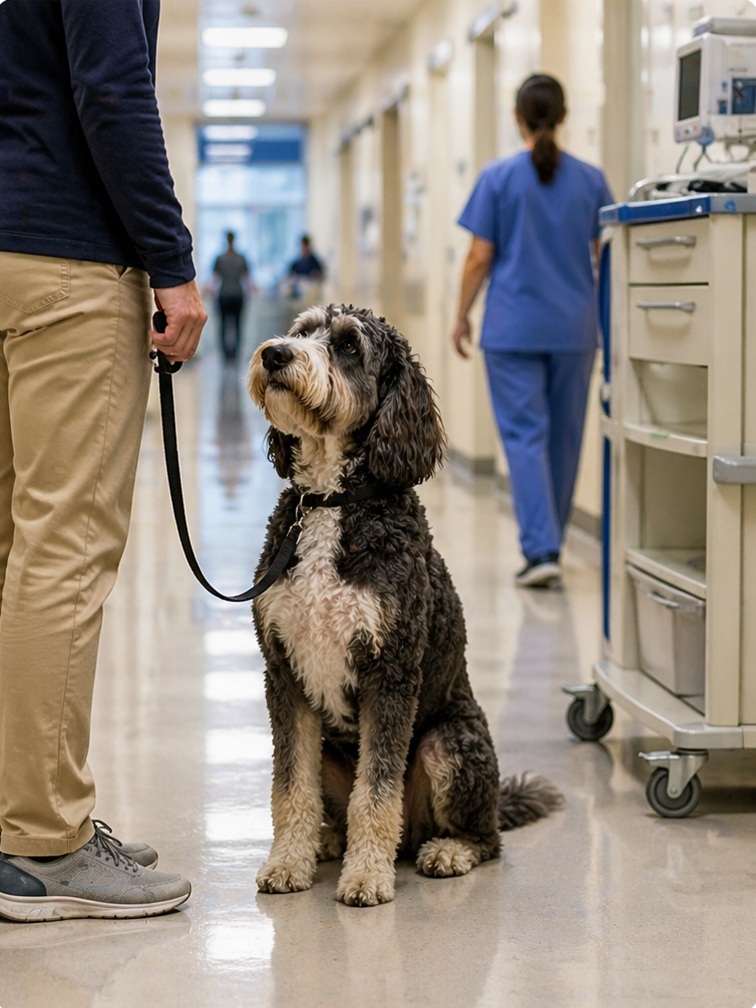
A Therapy Dog
Maintains composure when medical equipment, strangers, sudden noises, or unfamiliar touch enter the environment.
This transition reflects a shift from Conditioned Response to Environmental Stability, and from Command Compliance to Emotional Regulation.
Where Does Training Begin?
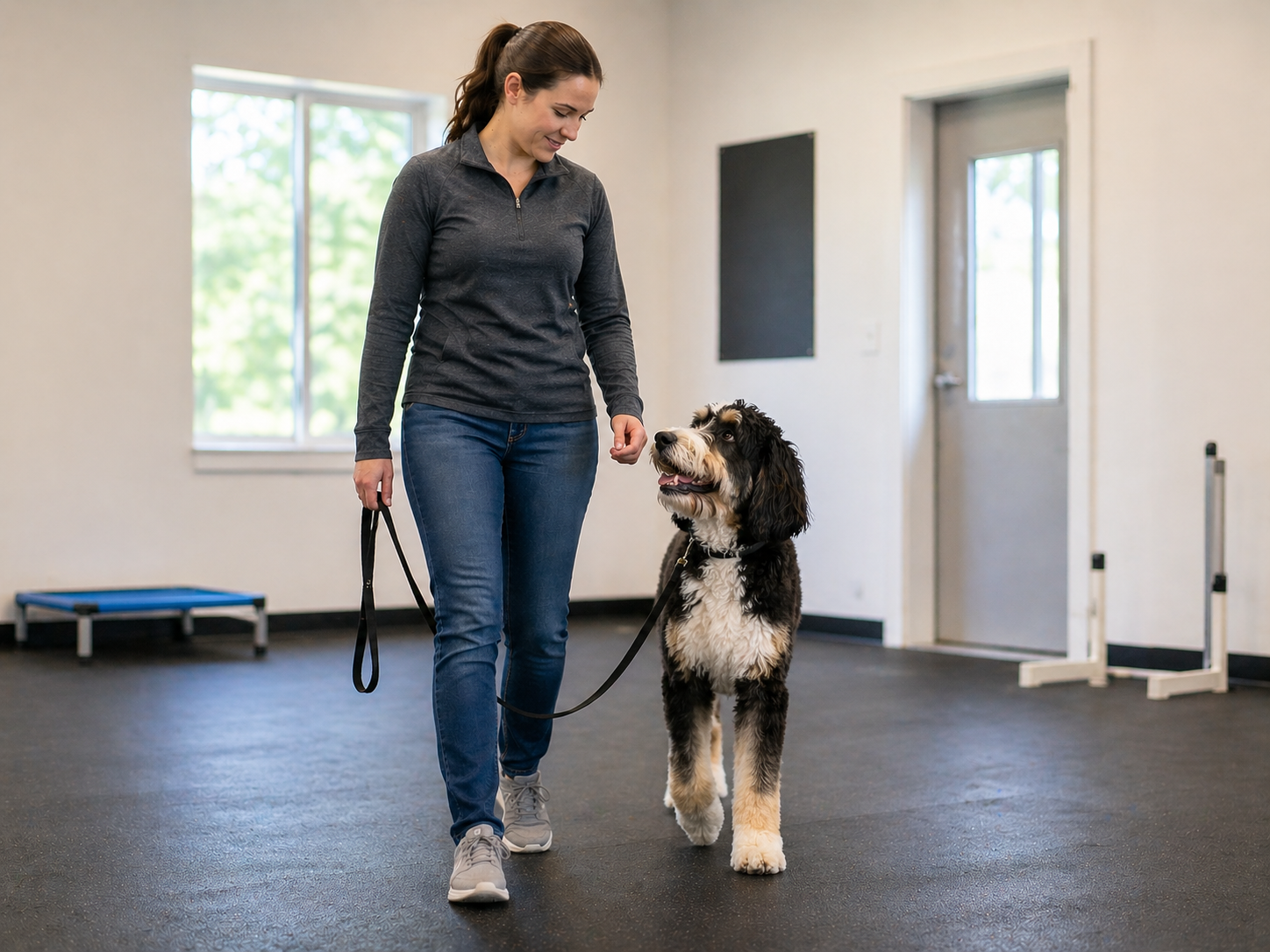
The industry standard starting point is the American Kennel Club Canine Good Citizen (CGC) Program.
Most therapy organizations—including Pet Partners and Alliance of Therapy Dogs—require CGC or equivalent preparation as a prerequisite.
CGC Core Skills Include:
- Accepting a friendly stranger
- Sitting politely for petting
- Walking through crowds
- Reacting calmly to other dogs
- Supervised separation from handler
Can Any Breed Become a Therapy Dog?
Yes—therapy work is temperament-driven, not breed-specific.
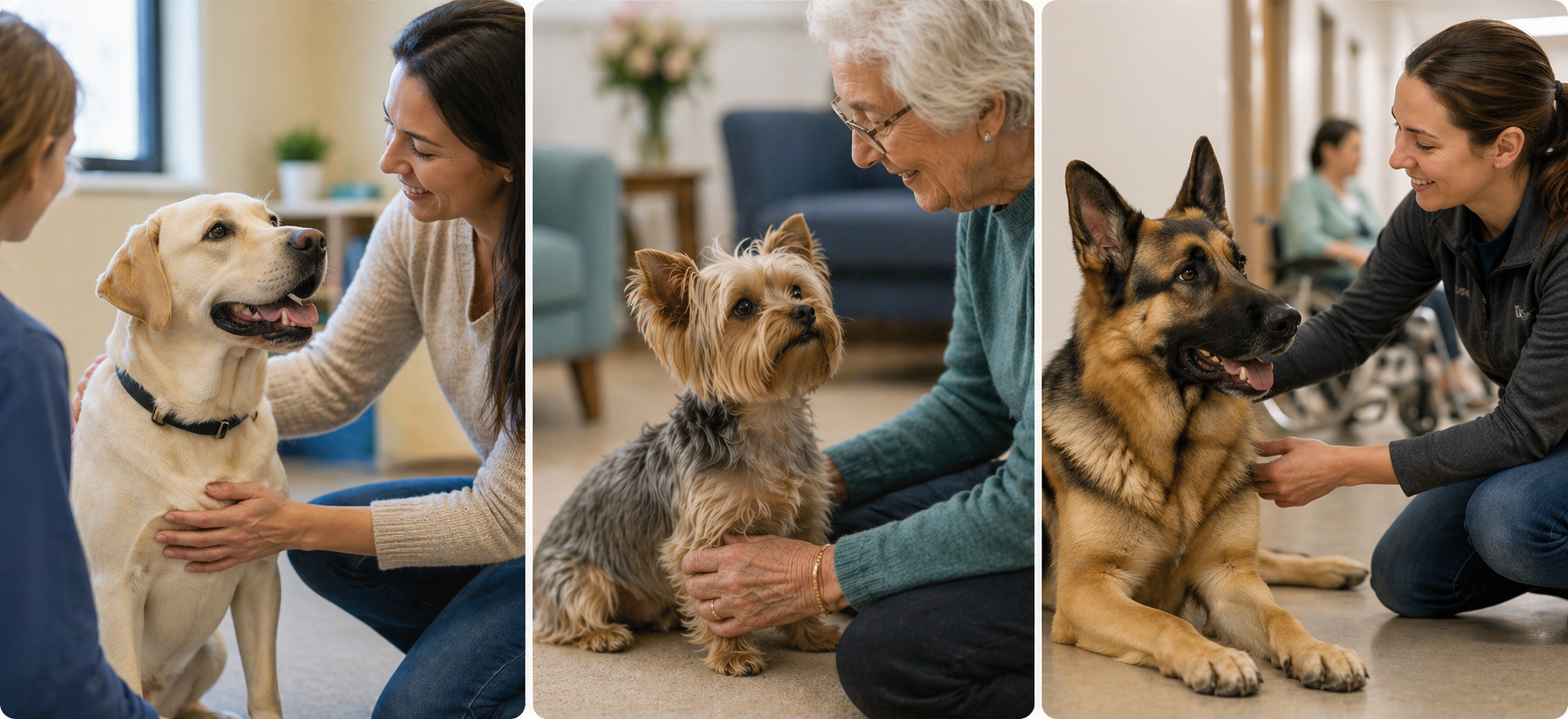
- Calm, predictable disposition
- Enjoyment of human interaction
- Low reactivity to noise, movement, and touch
- Fast recovery after startling events
A rescue dog can be just as effective as a purebred—what matters is consistency, not pedigree.
What Specialized Skills Are Developed?
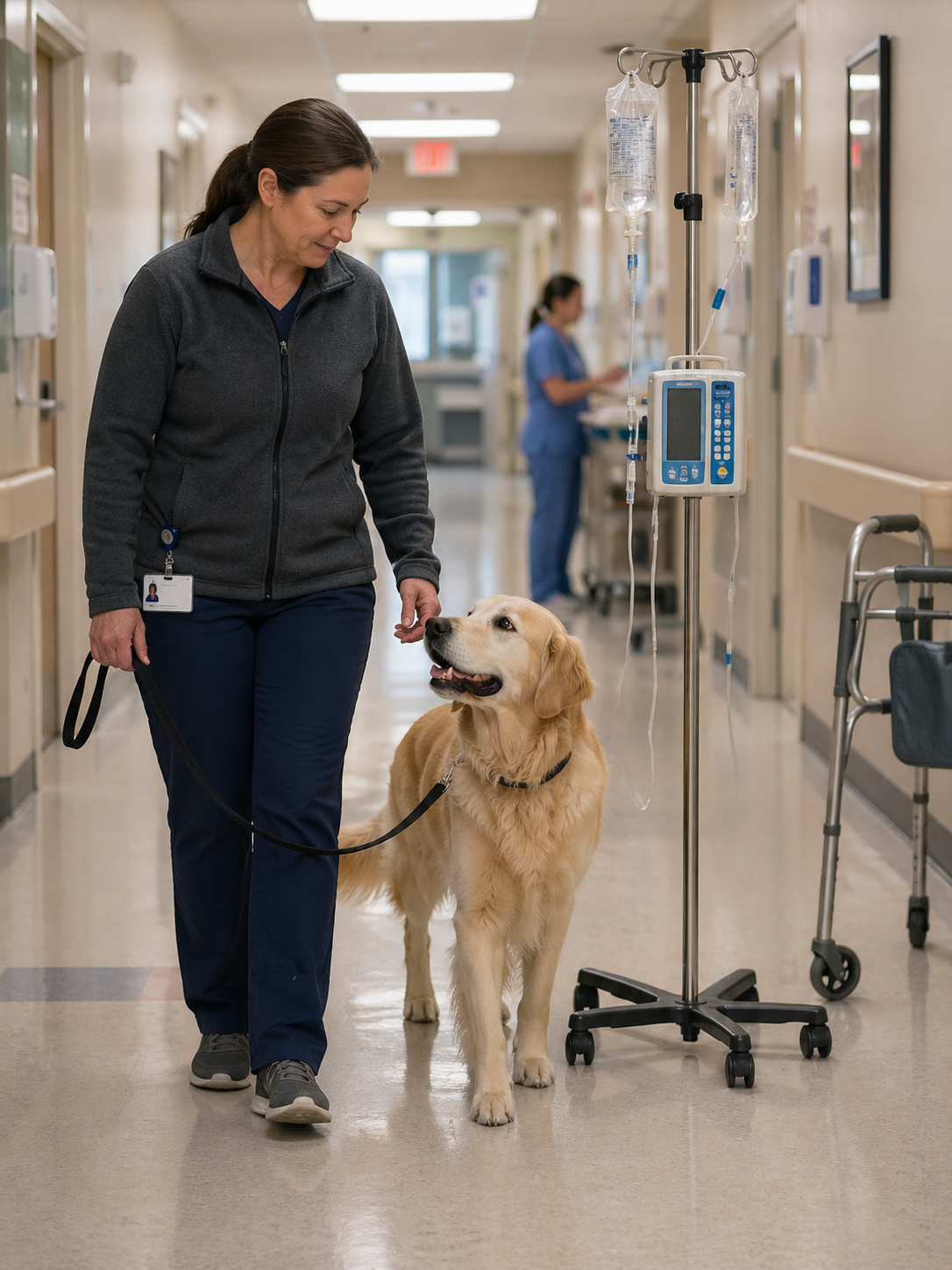
1. Environmental Desensitization
- Exposure to wheelchairs, walkers, IV poles, and crutches
- Tolerance of sudden noises and movement
- Navigating tight indoor spaces
2. Controlled Social Interaction
- Gentle “visit” behavior
- Accepting touch from multiple individuals
- No jumping, pawing, or overstimulation
3. Advanced Impulse Control
- Ignoring dropped food, medications, or distractions
- Maintaining focus without constant handler cues
4. Duration & Endurance
- Sustaining calm behavior over extended visits
- Managing fatigue without behavioral decline
The Handler: Half of the Therapy Team
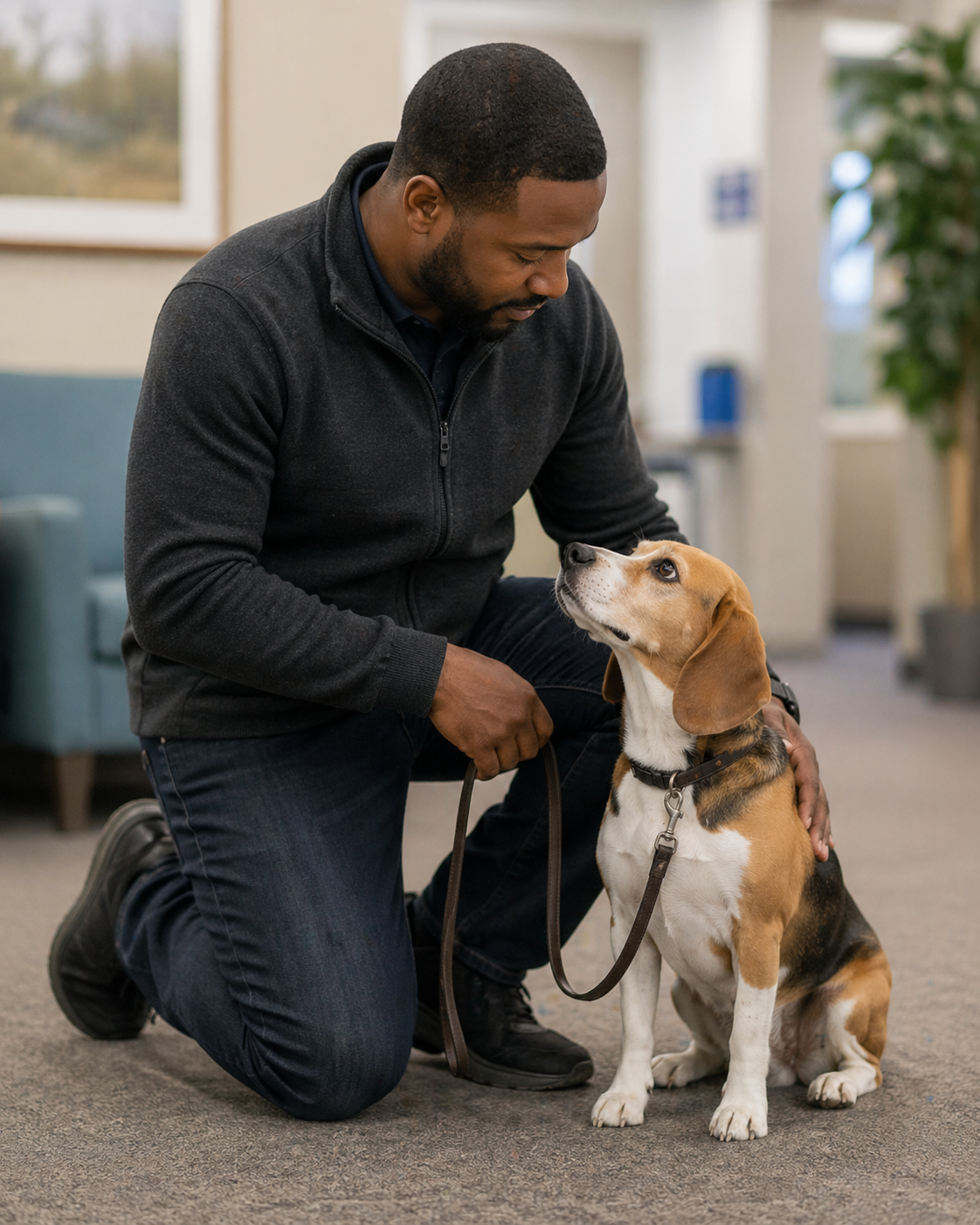
A therapy dog is never evaluated in isolation—the handler is equally critical.
- Recognize early stress signals
- Advocate for the dog’s wellbeing
- Manage interactions with patients, staff, and the public
- Maintain control without tension or overcorrection
In many certification programs, handler judgment is evaluated as closely as the dog’s behavior.
How Do You Know Your Dog Is Ready?
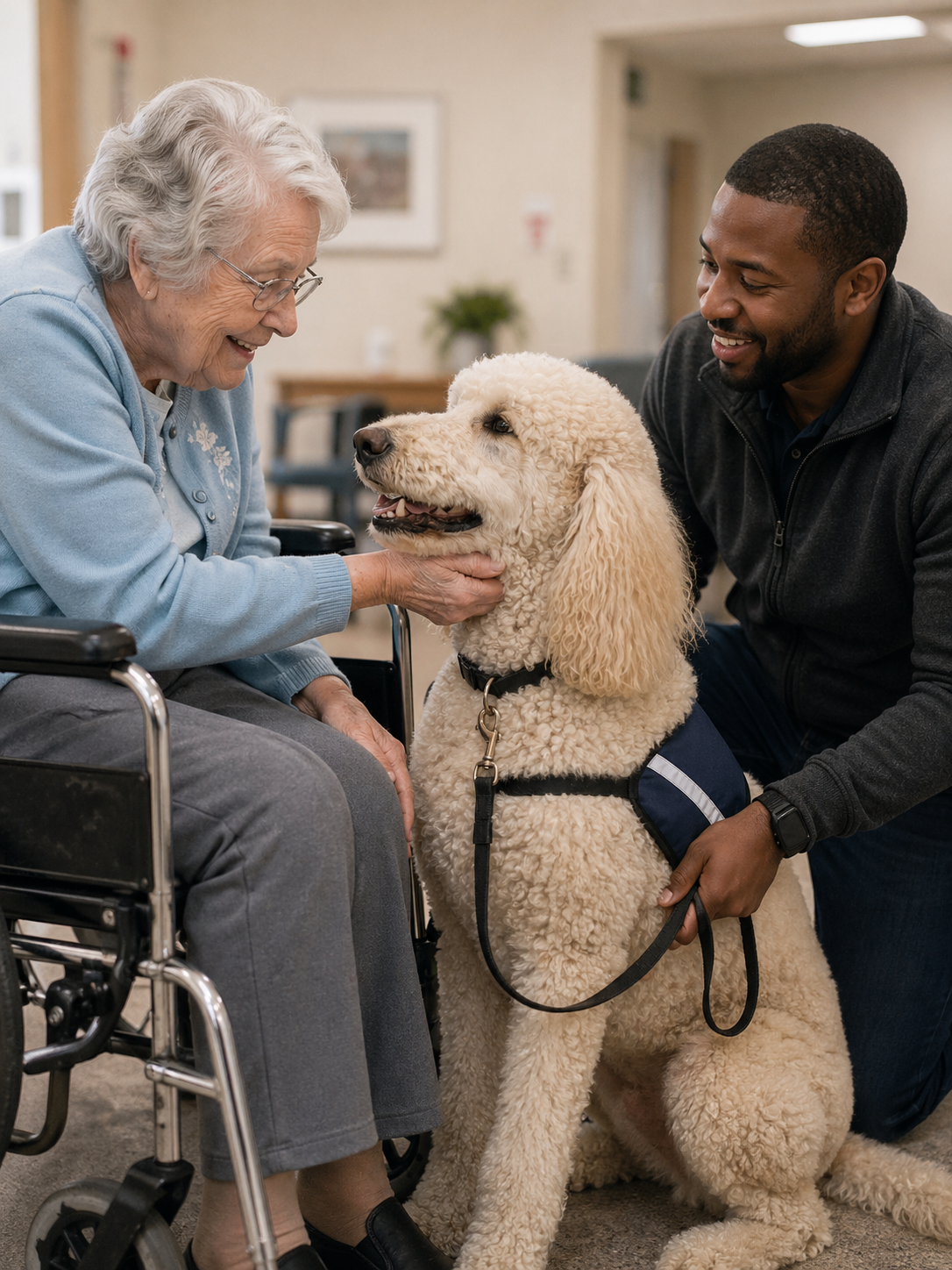
We recommend a Therapy Preparation Evaluation, which simulates real-world conditions.
- Remain calm under mild stress
- Show genuine interest in people
- Recover quickly from unexpected stimuli
- Maintain handler connection without dependency
Most importantly: the dog should enjoy the work—not just tolerate it.
Certification Pathways
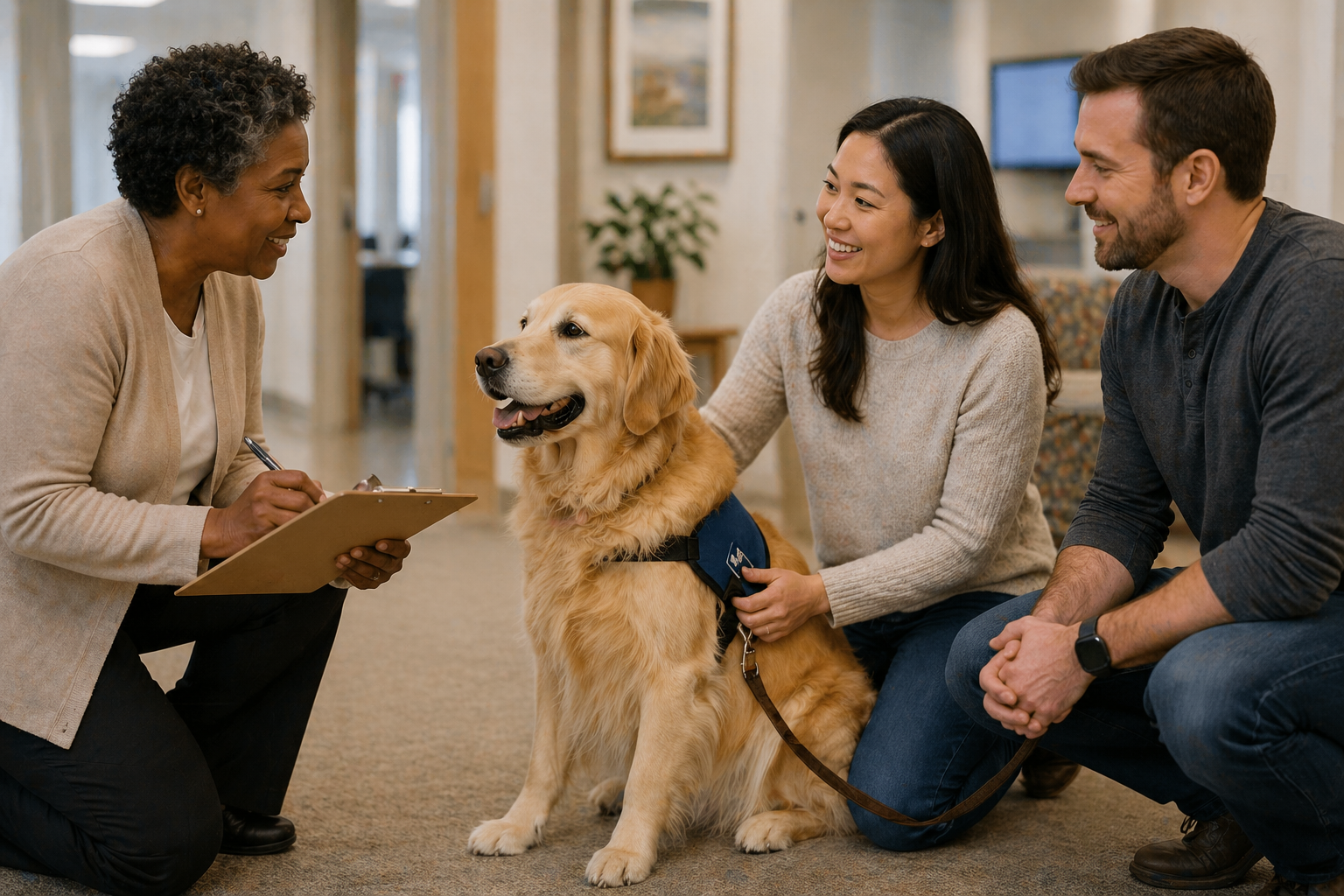
Once ready, teams typically pursue evaluation through recognized organizations such as:
- Pet Partners
- Alliance of Therapy Dogs
- Local hospital or school-based therapy programs
Each organization has temperament assessments, supervised visit requirements, and ongoing behavioral standards.
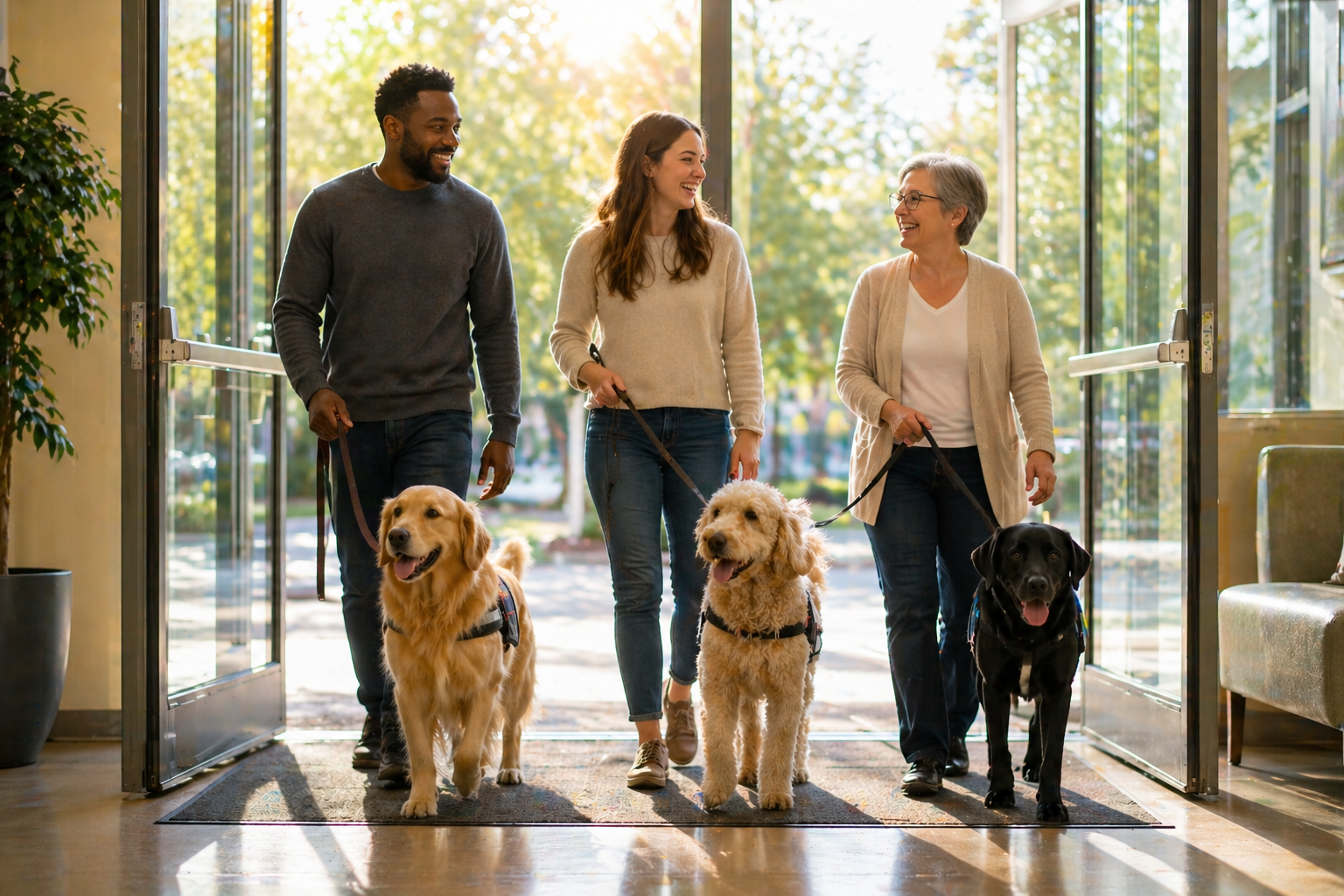
Ready to Start Your Journey?
Therapy dog work is one of the most meaningful ways to give back—bringing comfort, connection, and calm to those who need it most.
At Canine Concierge Corporation, we help guide you through temperament evaluation, training readiness, certification pathways, and responsible therapy team development.
View Upcoming CGC ClassesTemperament Assessment Request
Not every dog is suited for therapy work—and that’s okay.
What matters is identifying whether your dog has the right temperament, stability, and social comfort to thrive in real-world environments.
At Canine Concierge Corporation, we evaluate:
• Calmness under mild stress
• Comfort with unfamiliar people and handling
• Reaction to movement, noise, and equipment
• Recovery time after startling events
This is not a pass/fail test—it’s a professional readiness assessment designed to guide your next steps with clarity and confidence.